


Content planning that gives marketing a backbone
Content planning done in Bury St Edmunds for businesses across Suffolk, Cambridgeshire and Norfolk, and included in every website plan from £189 a month rather than sold as a separate document. Before a page is built we research which services people search for, in which towns, how many a month and who you are up against, and the plan that comes out of it is a page for every search you can win, reported on every month.
Google
Webflow

Every page decided by keyword research, before anything is built
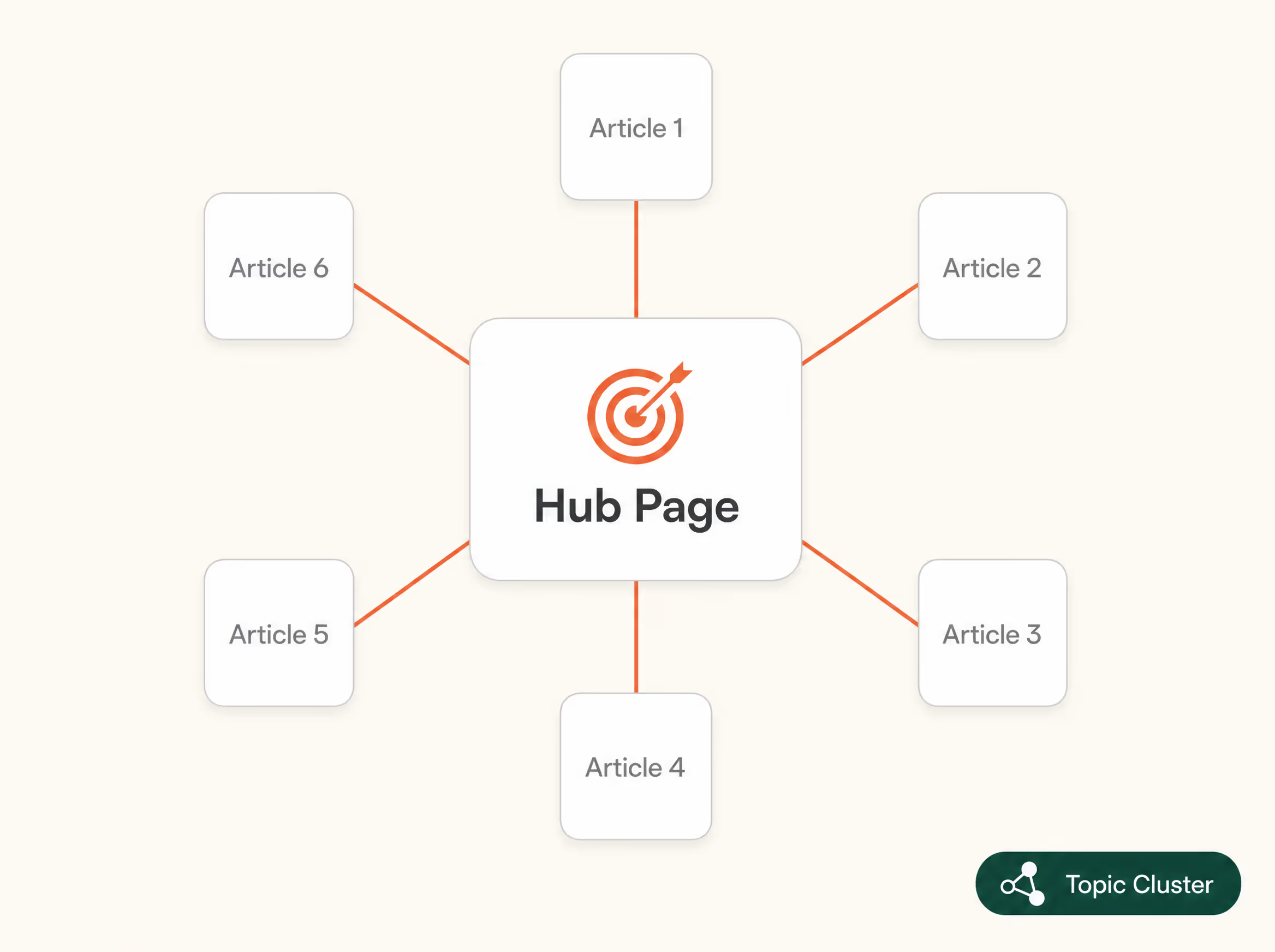
The plan is not a list of blog ideas somebody thought of in a meeting. It is the keyword research: every service you offer set against every town you work in, with the number of people searching for each combination every month and how strong the businesses already ranking for it are. A heating engineer in Bury St Edmunds might find that boiler repairs Newmarket is searched every day with 2 weak competitors on page 1, while underfloor heating Mildenhall is searched a handful of times a month against a national firm, and the plan builds the first and leaves the second. You only get pages that can win, chosen before we write a word.
A monthly ranking report instead of a posting quota
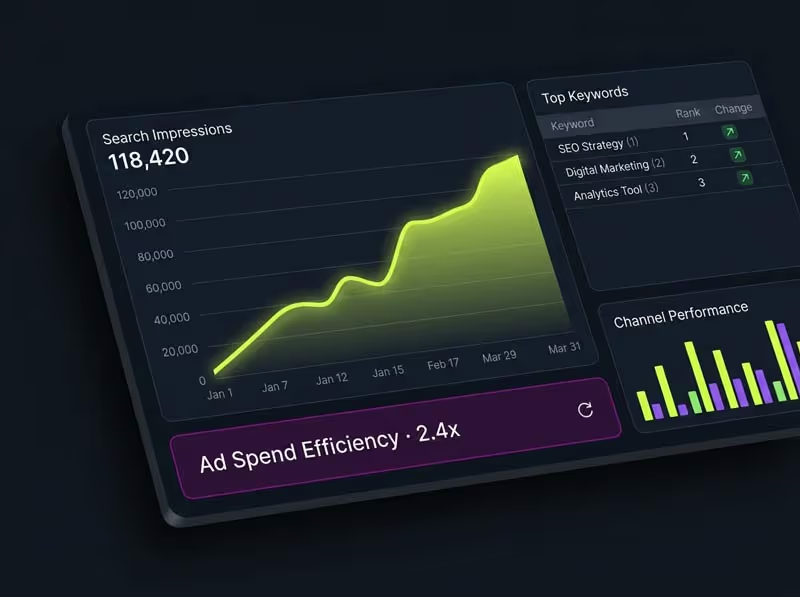
Most content plans collapse by the third month because they were built on a posting quota nobody could keep, and a quota measures effort rather than results. Ours has no quota. The deliverable is the monthly ranking report, which shows where every service in every town sits in Google and in the map pack, which pages moved, which are close to page 1 and getting a push, and which new searches the research has turned up since last month. If a page is not moving we change the page, not the schedule. It is the same report every plan includes, so you are never guessing whether the work is working.

Included in every website plan from £189 a month
There is no separate planning fee. The keyword research, the page plan and the monthly ranking report are part of every website plan: Starter from £189 a month covers up to 6 services across 6 towns, Business from £249 a month covers up to 9 services across 10 towns, and Market Leader from £329 a month covers up to 12 services across 14 towns, all on a 12 month term then rolling monthly, with nothing upfront. If the research shows a town or a service worth adding beyond the allowance, that is £15 a month for a town and £20 a month for a service, decided from the research before anything is built.

Planned for Google search and AI search at the same time
The same person who searches boiler repairs Newmarket on Google now asks ChatGPT for a good heating engineer near Newmarket, so every page in the plan is built for both from the start: schema on every page so Google understands what and where, an llms.txt file and AI search setup so ChatGPT, Perplexity and Google AI Overviews can read and quote the site, and question led sections that give an answer engine a clean sentence to lift. None of this is an add on. It is in every plan, and the monthly ranking report tracks AI visibility alongside the Google positions so you can see both moving.

Briefs that feed the AI Content System at £195 a month
The research becomes the brief for everything produced afterwards. Every page in the plan carries its target search, the town, the questions people ask around it and the tone of voice set during the brand polish, so whoever writes it, our team for the plan pages or the AI Content System at £195 a month for the ongoing posts, seasonal updates and Google Business Profile content, is working from the same document. The social content shoots take their shot lists from it too, because if fitted wardrobes Haverhill is a search worth winning, the Haverhill wardrobe fitting is the reel to film and the photograph to put on that page.

New pages added as the research finds them
The plan is not finished at launch, because search does not stand still and neither does the business. Every month we rerun the research against what is actually ranking and what people in Suffolk are actually typing, and when a new combination turns up, a town you started working in, a service that suddenly has demand, a question people keep asking, a page is added inside the plan's allowance or agreed as an extra before it is built. Pages that are close to page 1 get pushed, pages that are not working get rewritten, and the whole of it shows up in the next ranking report rather than in a review meeting 9 months later.

Content planning that starts with what people in your towns actually search for, and ends with a monthly ranking report.
Most content failures are planning failures. The blog goes quiet because nobody decided what it was for, and the website has a page called Boiler Repairs because that is what the plumber calls the job. Nobody searches for boiler repairs. They search for boiler repairs Bury St Edmunds, and if the site has no page for that town, Google has nothing of yours to show and shows a competitor. Content planning here is the work of finding every one of those searches before anything is built: which services, which towns, how many people search each month and who is already ranking, so a heating engineer who covers 6 services across 6 towns ends up with a plan for 36 different searches and a page for every one of them. That research decides the coverage matrix, the pages are written and built inside the plan, and the monthly ranking report shows what moved. There is no posting quota and no separate planning fee, because the plan is what a website plan from £189 a month is: the research, the pages and the report, run from Bury St Edmunds for as long as you are with us.
Every review we have is 5 stars. Here is why.
Selected work
New & featured web design & marketing work
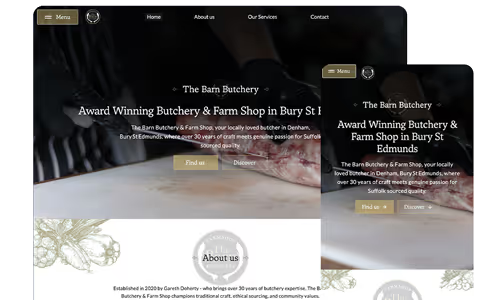
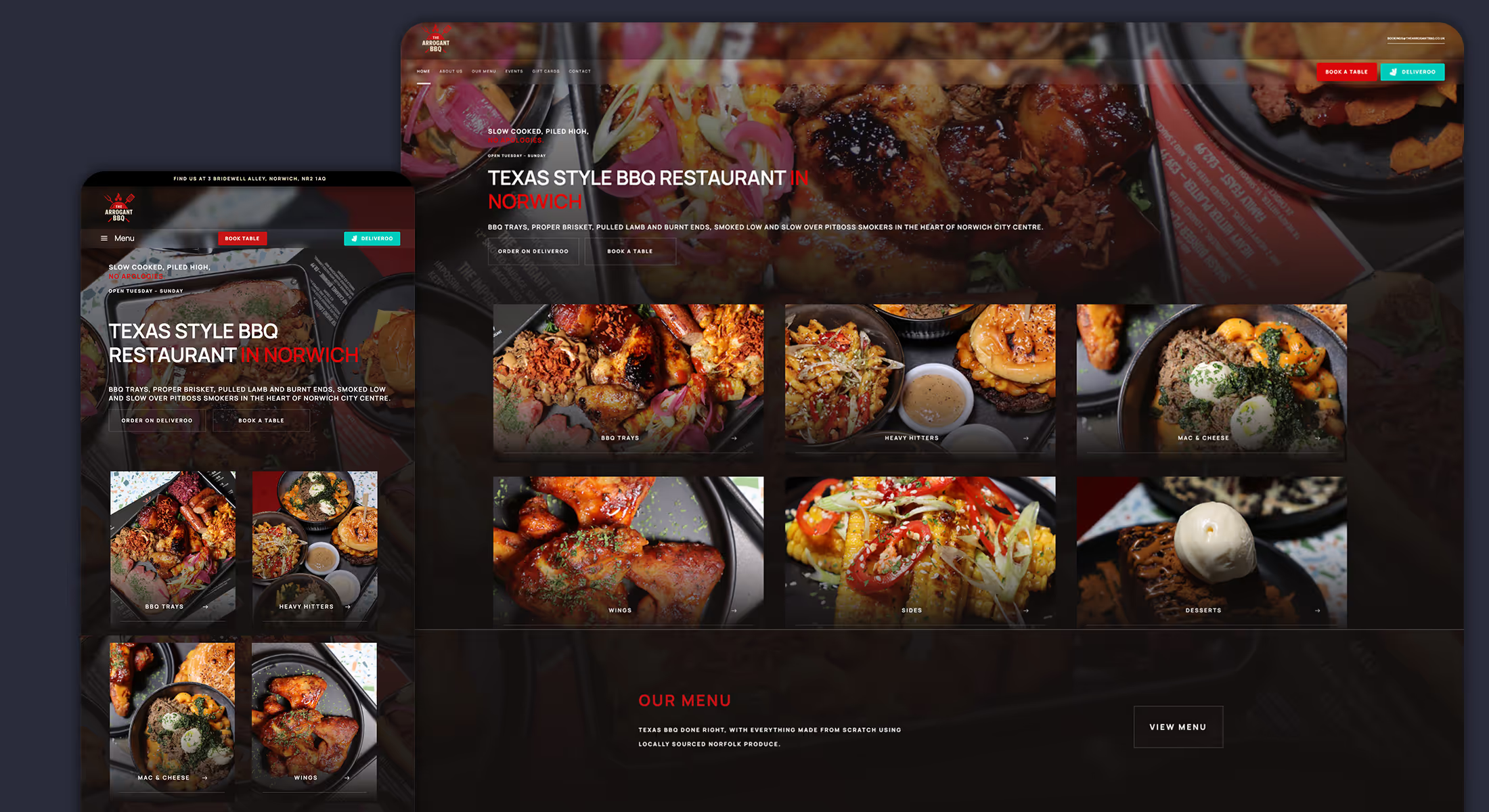
A closer look at what we build. Websites, branding, SEO and content for businesses across Suffolk, Cambridgeshire and Norfolk, and for brands well beyond it.
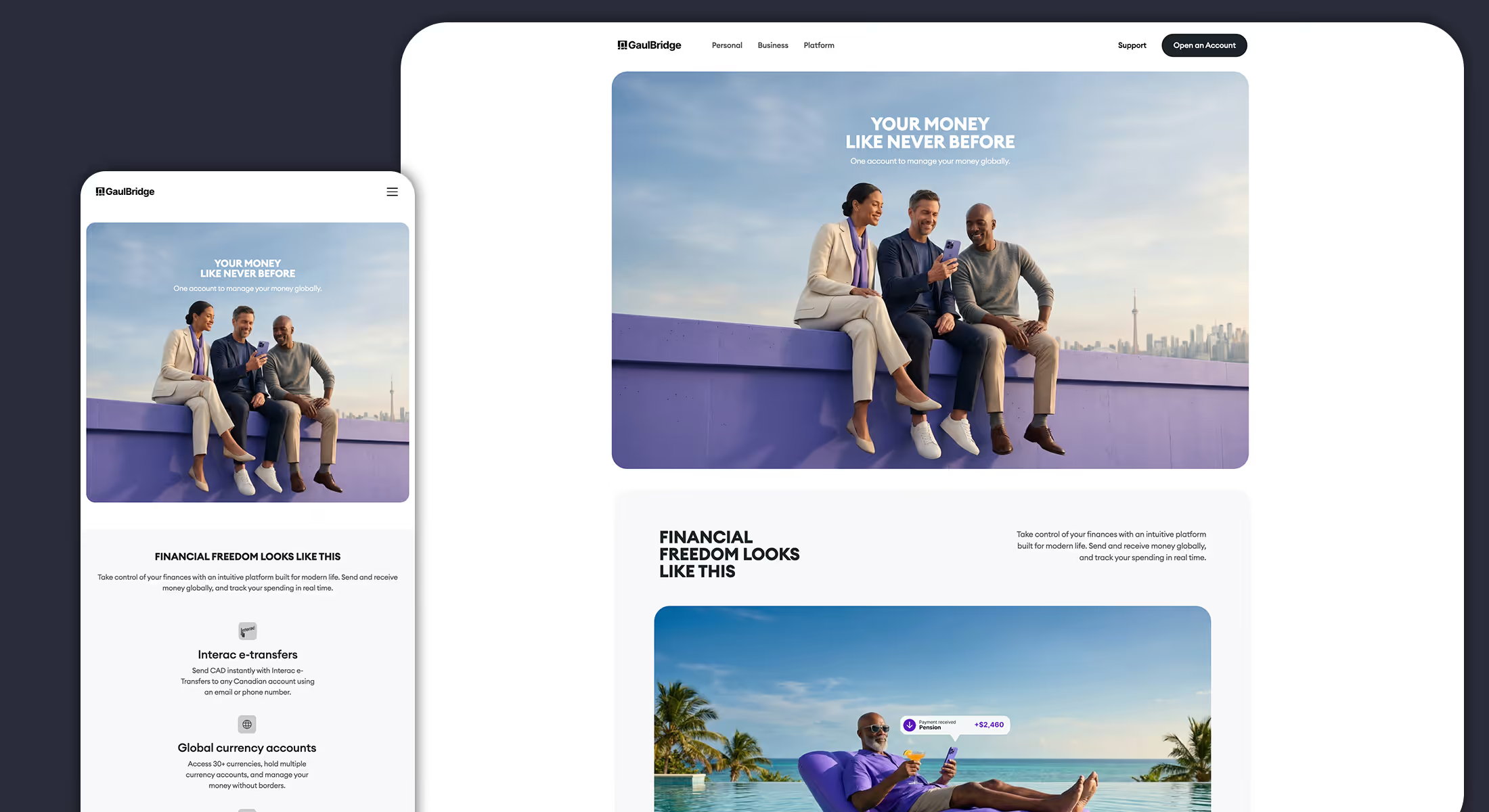


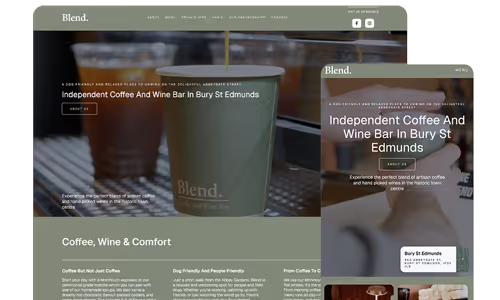
Blend Coffeeshop
Launching a coffee and wine bar at the heart of historic Bury St Edmunds
Starbots Fund
A bold digital hub for a £40m applied intelligence investment fund

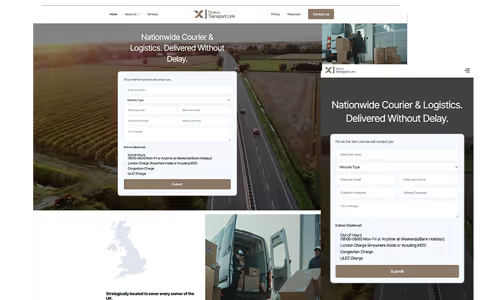
Nexus Transport Link
A full brand and lead engine for a UK wide logistics operator




What owners ask before they start.
What does a content plan actually look like in practice?
Will you write the content as well, or just plan it?
How does content planning connect to SEO and AI search visibility work?
What about AI search optimisation, and is it worth planning for separately?
How much does content planning cost across the different scopes?
What if we already have a half done content plan, or a plan that is not working?
How do you handle content plans for businesses with multiple distinct product lines or service categories?
How do you handle content planning when our team capacity changes through the year?
How does content planning differ from just having a marketing calendar?
What deliverables come out of a content planning engagement?
How do I get in touch with FutureProofs?
Web Design
Webflow websites for businesses across Suffolk, Cambridgeshire and Norfolk, sold as one monthly plan from £189 a month with the SEO included. A page for every service in every town you work in, fast, easy to update and ranking from launch.
Nothing upfront, one monthly number, a 12 month minimum then rolling monthly.
Nothing upfront, one monthly number, a 12 month minimum then rolling monthly.
Brand & Design
Identity work that makes your business look every bit as serious as the brands it is up against. Brand polish is included in every website plan, and Brand Builder from £795 covers a full identity with logo, guidelines and the assets that keep it consistent.
Creative Content
Photography, video and social content that actually looks like it belongs to your brand. Shoots from £545, quoted per shoot, planned, shot and edited so your channels always have something worth posting.
Paid Ads
Google, Meta, TikTok and LinkedIn campaigns that bring real enquiries, not just impressions. Conversion tracking goes in before a penny is spent, so every enquiry is tied back to the campaign that produced it.
Growth Systems
Quiet automations that handle the bits you don't have time for such as chasing leads, asking for reviews and keeping the CRM tidy. Fixed monthlies from £95, set up once and running every day.
Ecommerce & Custom
Shops and larger builds that do not fit a plan. Scoped individually from £4,995, built properly in Webflow, and owned outright in your own account from the day it goes live.
Let's work together
Oops! Something went wrong while submitting the form.


