You have just sent a quote. Before it went, you looked at the header for a second longer than usual: the logo somebody's cousin drew in 2017, sitting slightly off centre above a wall of Calibri, with a colour that no longer matches the van. And you thought, quietly, that this does not look like a company that charges what you charge.
That feeling is real and it usually gets misdiagnosed. Sometimes it is a logo problem, which is cheap to fix. Sometimes it is a brand problem, which is not. This is what a branding agency Bury St Edmunds businesses hire actually does, what the two sensible ways of buying it cost, and how to work out which one you need, including the fairly common case where the answer is neither yet.
Prices are in the post rather than behind a proposal, because the main reason a small firm never fixes this is not knowing whether the answer is £800 or £8,000.
Key takeaways
- Brand Builder is £795 as a one off and produces an identity system you own outright: a logo set, exact colour values, typefaces and a short written guide.
- Brand Partner is £495 a month and only earns its keep if you can name the design work of the next six months before you sign.
- Brand polish is included in every FutureProofs website plan, so a firm buying a site does not need a separate identity project just to look consistent.
- A refresh beats a rebrand whenever the existing name is still recognised locally, because familiarity is the asset you would be throwing away.
- A brand project will not fix weak positioning, wrong pricing or a folder of bad photographs. Those are three separate jobs and no logo repairs them.
Is this a logo problem or a brand problem?
Worth settling first, because the two cost very different amounts and most owners assume the expensive one.
Signs it is a logo problem
The mark itself is the weak link, and everything else is roughly fine. You have one set of colours, you use one typeface, your photographs are decent, your tone of voice is consistent because you write everything yourself. But the logo was made in a hurry, exists only as a JPEG with a white box round it, and cannot be printed at any size larger than a business card without going fuzzy. That is a contained job. Redraw it properly, get the file formats a sign writer and a printer actually need, and you are done.
Signs it is a brand problem
The logo is not the issue. The issue is that three people in your business make design decisions and none of them agrees. The Facebook page is navy, the website is teal, the quote template is whatever Word defaulted to, and the van says something slightly different again. Nothing is individually terrible. Together they read as improvised, and improvised loses the close call against a competitor who is no better than you but simply looks assembled.
The test is simple. If you can fix it with one new file, it is a logo problem. If fixing it means making decisions that other people then have to follow, it is a brand problem, and a new logo on its own will not touch it.
What a branding agency Bury St Edmunds firms hire should hand you
Ask this before anything else, because the deliverables list is the difference between owning a system and renting a designer.
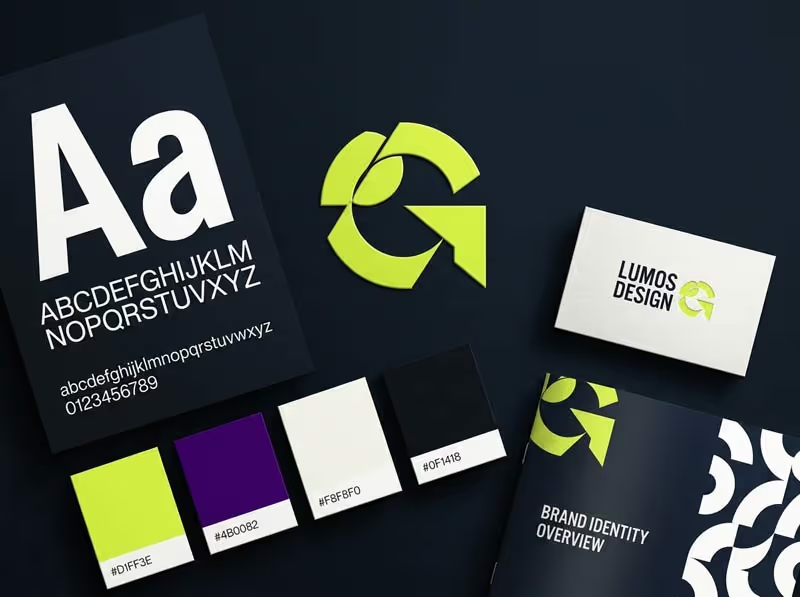
- A primary logo and its variations. Full lockup, a stacked version, a simplified mark for a social avatar or a stamp on a coffee cup, and a single colour version for a van, an embroidered polo or a one colour print job.
- Files in formats other people can use. Vector for the sign writer and the printer, PNG with transparency for screen, and a version that works on a dark background. If you get one JPEG you have been shortchanged.
- A palette with exact values. Hex for screen, CMYK for print, and a defined role for each colour. Roughly orange is not a palette.
- Two or three typefaces, with rules. Which one is headings, which is body, and a licensed fallback for the things you type yourself in Word and Google Docs.
- A short written guide. Ten useful pages beat sixty decorative ones. Its job is to let a printer, a sign writer or a future freelancer stay on brand without ringing you.
- The words, or at least the start of them. How you describe what you do, in one sentence, consistently. This is the half most identity projects skip and the half customers actually read.
What a brand project will not do
It will not tell you who to sell to. That is a positioning and messaging job, and doing the visuals first when the positioning is wrong just makes the wrong message look tidier. It will not fix photography, and a beautiful identity applied to phone snaps taken in bad light still reads as cheap. It will not make a bad product good, and it will not on its own bring in enquiries, because a brand improves the conversion of attention you already have rather than creating attention from nothing. Anyone selling a logo as a growth strategy is selling you something else.
What branding actually costs in 2026
Three sensible ways to buy it, and they suit genuinely different businesses.
| What you get | Brand Builder, £795 once | Brand Partner, £495 a month | Full studio identity project |
|---|
| Logo set and file formats | Yes | Yes, and revised as you grow | Yes, usually the deepest exploration |
| Palette, type and written guide | Yes | Yes, maintained | Yes, often extensive |
| Ongoing design work | No, it is a finished project | Yes, that is the point of it | Usually quoted separately |
| Naming, research, workshops | No | By arrangement | Commonly included |
| Typical timeline | About a fortnight | Continuous | Two to four months |
| Best for | A firm that needs the system once and will apply it themselves | A firm producing design work every month | A business with real budget and a complex estate |
The honest test between the first two is a calendar. Write down every piece of design work you know you will need in the next six months: menus, a price list, a trade brochure, exhibition graphics, a van, three campaign posters. If that list is long and keeps growing, £495 a month is cheaper and far less stressful than commissioning each piece separately. If the list is empty after the initial project, buy Brand Builder at £795 and stop there. Paying a monthly retainer to look at a finished logo is money set on fire.
One more option people miss. If a new website is already on the list, brand polish is included in every website plan, so the colours, type and layout get put right as part of the build rather than as a separate purchase. That is often the right sequencing for a small firm, and the plans are set out on the pricing page.
Rebrand or refresh? A test that gives you an answer
Most articles list considerations and leave you where you started. Score these five instead. One point each for a yes.
- Has the business changed what it actually sells? Not grown. Changed. A landscaper who now does commercial grounds maintenance is a different company to the one on the old sign.
- Would you be embarrassed to have your name read aloud at a networking event? Names chosen at the kitchen table in year one often stop fitting by year six.
- Are you merging, splitting, or adding a partner whose name should be on the door?
- Is the name causing practical problems? Nobody can spell it, the domain is taken by a firm in Kent, or it describes one service out of the nine you now offer.
- Are you actively losing work to firms you know you outclass? Repeatedly, at the shortlist stage, before anyone has met you.
Three or more and a rebrand is defensible. Two or fewer and you want a refresh: keep the name, keep whatever recognition you have earned on Abbeygate Street or out towards Stowmarket, and put the money into tightening the mark, fixing the palette, sorting the typography and applying it everywhere. A refresh is faster, costs less and does not ask your existing customers to relearn who you are. Throwing away twelve years of local familiarity because you have grown tired of looking at your own logo is the most expensive mistake in this whole subject.
When you do not need a branding agency yet
Three situations where the honest answer is not now.
You are less than a year old and still working out what you sell. Whatever identity you buy today will be wrong by the time you know the answer, so spend the £795 on photographs and a decent website instead and come back when the offer has settled. You have no consistent way of using what you already own, in which case the problem is discipline rather than design, and a free afternoon spent locking your existing colours into your templates will get you eighty percent of the benefit for nothing. Or your enquiries are fine and your close rate is fine, in which case a rebrand is a personal preference, which is allowed, but should be budgeted as one rather than justified as marketing.
There is a fourth. If your website is genuinely bad, fix that first. A strong identity on a slow, thin site is a good suit with no shoes, and the trust signals a website needs matter more to a stranger than the exact weight of your logotype.
The audit you can do yourself on Sunday afternoon
Nobody needs to be hired for this and it takes about forty minutes.
- Gather everything a customer sees. Home page, Google Business Profile, Facebook and Instagram, your last quote or invoice, an emailed signature, a photo of the van or the shopfront, and any printed leaflet still in circulation.
- Put them side by side. On a table, or as screenshots pasted into one document. The point is seeing them together, which you never otherwise do.
- Count the colours. Genuinely count them. Most small firms find five or six blues they thought were one.
- Count the logo versions. Anything above two, one of which is a JPEG with a white box, tells you where to start.
- Read the first sentence of each. If your website, your profile and your leaflet describe the business three different ways, that is the actual problem and it is a writing job before it is a design job.
Whatever comes out of that exercise, fix the free things first. Standardise the profile photo, apply one colour and one typeface to your quote template, and delete the leaflet. Then decide whether you are buying anything at all. If you want a worked example of where this ends up, the identity, menus and site we built for Blend on Bury's Angel Hill shows how one system carries across a shopfront, a menu and a website.
Frequently asked questions
How much does branding cost for a small business in Suffolk?
A full identity starts at £795 as a one off with FutureProofs, and Brand Partner is £495 a month for firms that need continuous design work. Studio identity projects with naming and research cost several thousand and take months. Brand polish is also included in every website plan, which suits businesses buying a site anyway.
Do I need a rebrand or just a new logo?
Score the five question test above. If the business has genuinely changed what it sells, or the name is causing practical problems, a rebrand is defensible. Otherwise refresh: keep the name and the recognition, redraw the mark, fix the palette and typography, and apply the result consistently. A refresh is faster, cheaper and loses nothing you have already earned.
Will I own my logo and brand files?
You should, and you should get it in writing before you start. With us you own the finished identity outright, in the vector and screen formats a printer, sign writer or future designer will ask for. Be wary of any arrangement where the editable files stay with the agency, because that quietly taxes every project you commission afterwards.
How long does a brand project take?
About a fortnight for a focused small business identity, assuming you reply promptly at each stage. The usual shape is a short discovery conversation, a set of directions to react to, refinement of the chosen route, then final files and the written guide. Projects including naming, photography or a full website build run considerably longer.
Should I do the branding or the website first?
Branding first, or both together, because the website is where most people meet the brand and rebuilding a finished site to fit a new identity wastes money. Doing them together is usually best, since the colours and type flow straight into the build. Brand polish is included in every plan precisely so this stops being a sequencing problem.
Is a £795 identity enough for a real business?
For most independent firms in Suffolk, yes. What £795 buys is judgement plus a usable system: a proper logo set, exact colour values, chosen typefaces and a guide you own. What it does not buy is naming, market research or weeks of exploration. Businesses that genuinely need those know it already and should budget accordingly.
What to do with all this on Monday
Do the forty minute audit before you contact anybody, including us. It costs nothing, it is uncomfortable in a useful way, and it turns a vague sense that things look scrappy into a short list of specific faults. Half the businesses that do it discover the fix is discipline rather than design, which is the cheapest possible outcome.
If the audit says you do need the work, be clear about which of the three routes you are buying and why, and ask any agency you speak to for the deliverables list and the ownership terms in writing before the first invoice. Good ones will already have both to hand.
You can see how we handle identity work locally on the Bury St Edmunds branding page, how it looks across the rest of Suffolk, and what happens afterwards on menus, signage and print. When you want a fixed quote rather than a range, tell us what the audit turned up.