Digital Marketing in Bury St Edmunds: Strategies for Local Growth

Post Image

Digital Marketing in Bury St Edmunds: Strategies for Local Growth

Introduction: Marketing has always been about reaching the right people in the right place with the right message. In today’s world, “the right place” is increasingly digital. Even for businesses that primarily serve the local Bury St Edmunds area or Suffolk region, digital marketing is a powerful way to connect with potential customers. Whether you’re a small shop, a restaurant, a service provider, or a B2B company, a solid digital marketing strategy can amplify your reach, drive more leads or foot traffic, and ultimately boost your bottom line.

Digital marketing is a broad term that includes everything from your website and search engine presence to social media, email campaigns, and online ads. The beauty of it is targeting and measurability: you can focus on people in specific areas (e.g., only Suffolk users), of specific demographics or interests, and you can track results fairly precisely (how many clicked, called, bought, etc.). This means you often get more bang for your buck compared to traditional media like print ads or leaflet drops, which can be hit-or-miss.

In this post, we’ll outline key digital marketing strategies that are especially relevant to local businesses:

  • Ensuring your website is effectively converting visitors (and how to improve it if not).
  • Boosting your SEO (Search Engine Optimisation) so that people in our area find you when searching for your products or services.
  • Utilizing social media not just for likes, but for real engagement and driving customers to action.
  • Running online ads (PPC on Google, social media ads) with local targeting to get on the radar of those who likely need what you offer.
  • Content marketing and community engagement that build your brand’s authority and visibility over time.
  • And importantly, using analytics to continuously refine your efforts for the best ROI.

Digital marketing might sound complex, but our goal is to break it down into approachable steps you can take – or questions you can discuss with marketing professionals – to get results. We’ll keep in mind the context of Suffolk/Bury St Edmunds throughout, because local marketing often has its own flavor (emphasizing community, leveraging local networks, etc.). So, let’s dive in and explore how going digital can help your business grow locally and beyond.

Key Takeaways:

  • Local SEO is King: A top priority is appearing in local search results (Google’s local 3-pack and organic listings). With 87% of consumers starting their search for local businesses online, if you’re not showing up, you’re invisible. Optimizing your Google Business Profile and on-site local keywords can dramatically increase your visibility to nearby customers.
  • Social Proof and Engagement: Maintaining an active social media presence (Facebook, Instagram, LinkedIn, etc.) helps humanize your brand and keeps you top-of-mind. It’s also where word-of-mouth happens digitally. People often ask for recommendations in local Facebook groups – you want to be the name people mention. Cultivating good reviews and responding to customers online builds trust.
  • Targeted Advertising: With tools like Facebook Ads or Google Ads, you can spend a relatively small budget and specifically target residents of Bury St Edmunds, or people within X miles of your shop, or those searching for “your service + near me”. This focuses your marketing spend on the most likely prospects and can yield quick traffic or inquiries.
  • Content is Fuel: Sharing useful or entertaining content related to your business niche (blog posts, videos, tips) can attract and educate potential customers, subtly marketing you as the expert. It also feeds your social channels and improves SEO. For example, a local gym could post “5 Scenic Running Routes in Bury St Edmunds” which gives value to locals and draws attention to the gym’s expertise/community role.
  • Data-Driven Improvement: One huge advantage of digital is you can measure pretty much everything – website visits, ad clicks, conversion rates, etc. By looking at this data regularly, you can see what’s working, what’s not, and adjust your tactics. For instance, if an email campaign gets a low open rate, you test new subject lines next time. If Facebook brings more customers than Twitter, you allocate more effort there. This ongoing optimization ensures your marketing effort and budget aren’t wasted.

Ready to enhance your digital presence? Let’s explore these strategies in detail and empower your business to thrive in the local online landscape.

Enhancing Your Online Presence (Website & SEO)

Your online presence is essentially your digital storefront. It often starts with your website and your visibility on search engines. Here’s how to make sure those are working effectively for you:

Website Optimization:

  • User-Friendly Design: We touched on web design in previous sections, but to reiterate – ensure your site is easy to navigate, clearly explains what you offer, and has obvious calls-to-action (like “Contact Us”, “Book Appointment”, “Shop Now”, depending on your goal). A surprising number of small business sites bury their phone number or don’t clearly state their location/hours – don’t make that mistake. Prominently display a phone number (clickable on mobile), address (with a map maybe), and a contact form. For example, a local plumbing company should have “Call 01234xxxxxx for 24/7 service” big and bold on the homepage, plus maybe a “Request a Quote” form.
  • Mobile Performance: Since many locals might quickly search on their phone (perhaps while on the go), your site must load fast and look good on mobile. Check it on your own phone: is everything readable? do buttons work? If not, fix it (a web developer can help, or a platform like Webflow inherently ensures responsiveness, as we implement).
  • Content Clarity: Ensure your site’s content communicates not just what you do, but why choose you and that you’re local. For instance, a hair salon’s site shouldn’t only say “We do haircuts and color” but also “Serving clients in Bury St Edmunds for 15 years – our award-winning stylists will make you look and feel your best.” The local mention and credibility boosters (experience, awards) can sway a customer. Also consider adding a bit of personality – an “About” section with your story or team photos can create a personal connection, which is important in community-based business.
  • Conversion Elements: If applicable, integrate online booking (restaurants, salons), ecommerce (for products), or lead capture (like “Download our free guide” in exchange for email, if you do that sort of content marketing). One client, a local travel agency, added a simple “Plan My Trip” inquiry form on their site and saw a noticeable uptick in leads because people found it convenient to request info after hours. Think about what action you want site visitors to take and make that as easy as possible.

Local SEO (Search Engine Optimization):
SEO is a big topic, but focusing on local specifics:

  • Google Business Profile (GBP): If you do nothing else for local SEO, claim and optimize your Google Business listing. As noted, this is what powers the map and local pack results when someone searches “[business] near me” or “… in Bury St Edmunds.” Steps:
    • Claim or create the profile at google.com/business, verify your address.
    • Fill every section: business description (use some keywords naturally, like “authentic Italian restaurant in Bury St Edmunds”), categories (choose primary and secondary categories that fit), attributes (like “wheelchair accessible”, “free Wi-Fi” as applicable), and definitely your hours, website link, and photos.
    • Photos: Upload high-quality images – exterior (so people recognize your storefront), interior, products, team, happy customers (if possible). Businesses with more photos get more engagement. And don’t just do it once, update occasionally – e.g., seasonal decor, new menu items, etc. Also encourage customers to add photos in their reviews.
    • Reviews: As mentioned, reviews matter a lot. According to some stats, 76% of local mobile searches result in a store visit within 24 hours, and 28% of those result in a purchase, and often those choices are influenced by reviews. Ask your happy customers to leave a Google review. You can do this in person (“We’d love if you could leave us a quick Google review, it really helps!”) and in follow-up emails/invoices (with a direct link). Then – crucial – respond to reviews, good and bad. Thank people for good ones (it shows you care). For a bad one, respond professionally and helpfully; this actually impresses future searchers that you handle issues responsibly.
    • Post updates to GBP. Google allows posts (offers, events, announcements). Use these, as they can make your listing stand out and show you’re active. For example, a retail shop can post “New Spring Collection Now In – view on our website!” with a pic, or a pub can post about an upcoming music night.
  • On-Page Local SEO: This means your website’s content should reflect local signals. Include your city or region name in key areas: page titles, headings, meta descriptions, and content where natural. E.g., your homepage title could be “Jones & Co Plumbing | Plumber in Bury St Edmunds, Suffolk”. If you serve multiple towns, consider pages on your site for each (“Areas We Serve” or separate service pages like “Web Design in Bury St Edmunds” – we do that ourselves because we serve multiple locations in marketing). Provide an embedded Google Map of your location on contact page – it’s another clue to Google about your location.
  • Citations: Ensure your NAP (Name, Address, Phone) is consistently listed across the web on local directories. We mentioned Yell, Bing Places, etc., in earlier posts. Consistency helps SEO. Being listed on local chamber of commerce site or tourism sites where relevant also helps. You can find opportunities by searching for lists like “Top [business type] in Bury St Edmunds” – see if there’s an article or directory, and try to get included or make sure your info is correct there.
  • Content for SEO: Creating localized content can boost your rankings for niche queries. Suppose you’re a landscaper; a blog post about “Garden Landscaping Tips for Suffolk Clay Soil” might capture someone searching “gardener Suffolk clay soil advice” etc., bringing them to you. Or a local event sponsorship news on your site (like “We’re proud to sponsor the Bury Christmas Fayre – come see our stall”) could bring in people searching that event and seeing you’re involved (plus shows community spirit).
  • Technical SEO: Not to get too technical, but basic stuff: make sure your site loads fast (hosting, image optimization), uses SSL (HTTPS – Google gives a slight boost to secure sites and users trust the padlock symbol), and is crawlable (a clean site map, no broken links). If you’re on a modern platform like Webflow or a well-managed WordPress, most of this should be fine. We run SEO audits for clients to spot any glaring issues.
  • Schema Markup: This is code you can add to help search engines with context. For local SEO, implementing LocalBusiness schema (with your name, address, etc.) can help. There’s also Review schema if you show testimonials on your site – which might make star ratings appear in your Google results snippet (attractive!). It’s a bit technical, but an SEO-savvy developer can add it. We often include these in sites we build.

The goal of all this is to be present whenever a local person searches for something relevant. If you optimize well, you might find yourself ranking not just for “[service] in Bury” queries, but also appearing on that suggestions map when someone nearby searches generally for the service without specifying location (Google will show local options). Given most people don’t look past page 1 of results, high rankings are invaluable. It can literally funnel a steady stream of leads or online orders without ongoing cost, unlike ads (though ads are good supplementally).

One client of ours, a driving school in Suffolk, invested in local SEO – after about 6 months, they went from page 3 to page 1 for “driving lessons Bury St Edmunds” and related terms, and they started getting a lot more calls from new students. They even had to expand instructors to meet demand. That’s the kind of growth SEO can bring when done right – it’s like having your shopfront on the busiest street online.

Remember that SEO is a long game (months to see big jumps, sometimes), whereas things like Google Ads are immediate (but stop when you stop paying). Ideally, you do both – short-term traffic via ads, long-term via SEO. But if budget is tight, start by optimizing organic stuff as it has lasting effect.

Engaging the Local Community Online (Social Media & Content)

Bury St Edmunds and Suffolk have a strong sense of community. Reflecting that in your digital marketing can set you apart from faceless corporations. Social media and content marketing are perfect avenues to express your brand personality, connect with locals, and build loyalty.

Social Media Strategy for Local Businesses:

  • Choose Platforms Wisely: You don’t have to be on every network; pick those your target audience uses. Facebook is generally a must for local reach (it skews a bit older, but many local community discussions happen there). Instagram is great if you have visual content (food, fashion, arts – anything photogenic). Twitter can work for quick updates and networking, especially B2B or if you have a knowledgeable voice in a niche. LinkedIn if you’re B2B or a professional service. For many small businesses around here, Facebook and Instagram are top.
  • Local Content Mix: Don’t just post sales pitches. Mix it up:
    • Show your human side: team photos, a staff birthday, behind-the-scenes of prepping your shop in the morning. People love seeing the faces and stories behind a business.
    • Customer spotlights: with permission, share a pic of a happy customer (e.g., “Congrats to our client Jane on her new kitchen makeover we completed!” if you’re a contractor, with before/after shots).
    • Local pride: celebrate local events and holidays. E.g., post wishing good luck to the Bury St Edmunds Rugby team on a big match, or share a beautiful photo of the Abbey Gardens in spring. This associates your brand with community spirit. We find these often get high engagement (people share or comment because they relate to the local reference).
    • Educational/Value posts: If you have expertise, share tips. A local accountant might post “3 Tax Saving Tips for Small Biz Owners” – which demonstrates value and likely shares among local business groups.
    • Interactive posts: Ask questions, run polls (“What’s your favourite thing about Bury St Edmunds market days?”), run small contests (“Comment with your ideal coffee flavor and win a free bag from us”), etc. Engagement like comments and shares increase your visibility in algorithms.
    • Promotional: Of course, announce new products, special offers, events at your shop. Just balance them with the above content so it’s not all selling. The general rule is give, give, give, then ask (Gary Vaynerchuk calls it “jab jab jab, right hook” – give value, then you’ve earned a promotion).
  • Local Group Participation: Join local Facebook groups (there are many: e.g., “Bury St Edmunds Community” etc.). Don’t spam them, but be helpful. If someone asks “Looking for a good plumber”, you or a happy customer could recommend your business. Some groups have days where businesses can post offers. Abide by rules, but being visible there is smart. Similarly Nextdoor (the neighborhood app) is rising in use; having presence or at least monitoring it for inquiries in your area could snag you leads.
  • Respond & Engage: Social is a two-way street. Reply to comments, thank people for shares, handle inquiries that come via Messenger or comments promptly. If someone leaves a complaint or negative comment, address it calmly and helpfully (as you would a review). Public responsiveness shows you care. Many folks treat Facebook like a customer service channel now – don’t ignore it.
  • Hashtags & Tagging: Use local hashtags on Instagram (#burystedmunds, #SuffolkBusiness, etc.) – it can help discovery. Tag local partner businesses or events (e.g., if you catered an event at The Apex, tag them – it may get you seen by their followers too). On Twitter, follow and interact with local accounts (council, news, etc.).
  • Paid Social: Consider boosting important posts or running targeted ads here too. The targeting can be pinpointed to town + interests. For example, a children’s clothing store could target women aged 25-45 in a 10-mile radius with an ad about a sale – likely reaching mums in the area. And you can set small budgets like £20 and see how it goes. The advantage is you can reach beyond your existing followers – crucial when starting out or trying to grow audience.

Content Marketing:

  • Blogging/Articles: Hosting a blog or news section on your site where you regularly post content helps SEO and gives you material to share on social media or email. We discussed ideas earlier – like a tourism company posting local travel guides, or a health clinic posting wellness tips specific to the season. Aim to post at least once a month or more if you can. Quality over quantity though – make it genuinely useful or interesting, not just filler. Over time, you become a content resource. I know a local IT firm that writes really down-to-earth tech security tips for local small businesses; they’ve gained clients who said “I read your article on backup solutions and figured I should call you.” It’s that trust from giving free advice that converted them.
  • Video Content: Video tends to get high engagement. You could do short videos – introducing your team, showing how a product is made (people love “craft in action”), giving quick tips. You don’t need fancy production; a modern smartphone and some basic editing (even built-in tools or apps) suffice for casual social vids. Live video (FB Live, Instagram Live) can be great for Q&As or virtual tours of your place, or live demos. For instance, a make-up artist could do a live tutorial and take questions from viewers – showcasing skill and promoting their services in a friendly way.
  • Email Newsletters: Build an email list from customers and interested website visitors (put a signup form on your site, perhaps offering a small incentive like “£5 off your first order if you subscribe” or “subscribe for exclusive deals”). Use email to send out maybe monthly updates – highlight a new blog post, announce a special, share a customer story. Email open rates can be quite good if you consistently send interesting content, and it drives traffic to your site or store. For local businesses, you can include invitations to events or thank you notes to the community too.
  • Collaborative Content: Partner with other local businesses for mutual exposure. E.g., a local caterer could do a guest recipe on a farm shop’s blog (using the farm’s ingredients – cross-promo), or a group of shops can create a joint “Holiday Gift Guide from Bury St Edmunds Indies” PDF that each shares to their audience – introducing customers of one to others. These collabs strengthen the local business network and everyone benefits from pooled audiences.
  • Community Involvement: Use your digital voice to amplify community causes. If you sponsor a charity run, post about why it matters. Or maybe start a digital campaign around something local (like a photo contest of the town’s best landmarks, tagged with your business hashtag). This sort of content marketing isn’t directly selling but it sells your brand as caring and involved, which can sway community-minded customers. It can also earn you local press coverage (e.g., if you donate to a cause and make a little story out of it on your site, local news might pick it up or at least the charity will mention you – more goodwill and exposure).

Online Advertising (PPC):
We touched on social ads, but I’ll note Google Pay-Per-Click too. Tools like Google Ads (search ads) allow you to bid on keywords. For local, you can geo-target so your ads only show to searchers in a set radius or region. If SEO will take time to get you on page 1, Google Ads can put you there immediately for your chosen terms (marked as ad, but many still click them). It costs money per click, so you want to optimize – ensure the ad copy is compelling and the landing page it goes to is relevant (if someone searches “emergency electrician Suffolk” your ad should say “24/7 Suffolk Electrician” and land on a page about emergency call-outs with a phone number).

  • If competition for a term is low, you might pay quite little per click (maybe £0.50-1.00 each); if high, could be a few quid. But consider the value – if 1 out of 10 clicks becomes a customer and a customer’s worth £100, paying £1 per click is profitable.
  • You can also do Google Display ads targeting local sites or users (those banner ads you see on news sites). These are less targeted intent (they’re not actively searching for you, it’s more brand awareness), but you can filter e.g., show on sites categorized under Home & Garden to people in East Anglia, if you’re e.g. a landscaper wanting to build awareness. For many small biz, search ads yield more direct ROI though.
  • Another interesting local PPC: Nextdoor offers local business ads now. Could be worth exploring if many neighbors in your area are on it.
  • Don’t forget YouTube (owned by Google) – if you have a video, you can geo-target video ads (like those skippable ones before videos). If you’re the only car dealership in town doing a YouTube ad, you might corner that small local segment of eyeballs effectively. But production needs might deter some; however, even a slideshow video with text can serve as a simple ad.

Data & Adjusting:

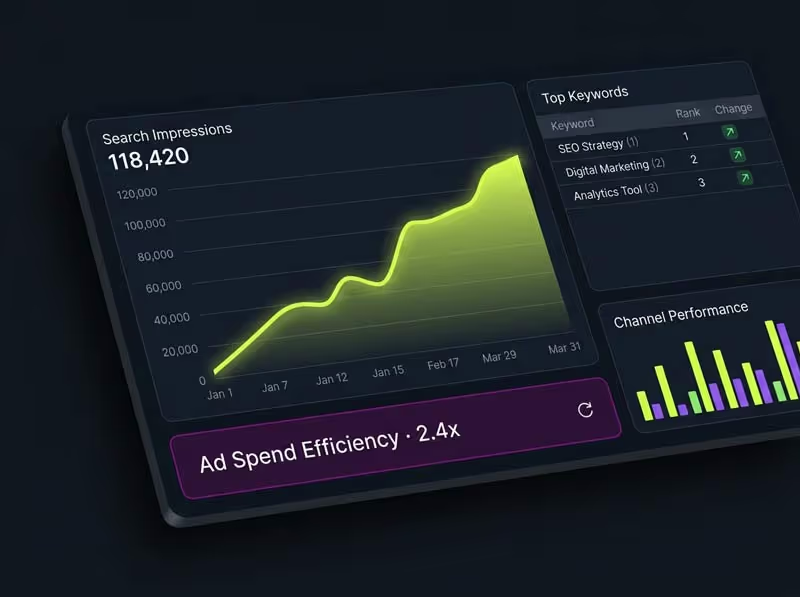
  • Track KPIs: key performance indicators for digital marketing could include: website visitors (from where?), form submissions/calls, online sales, social engagement, search ranking positions, email open/click rates, etc. Use Google Analytics on your site to see traffic and conversions. Social media business insights show how posts do. Ad platforms have their metrics. It’s a lot of data, but focus on a few that tie to your goals. If you want more bookings, measure how many online inquiries or booking engine uses you get after campaigns.
  • Regular Reviews: Maybe monthly, glance at these numbers. Which blog posts got views? What was your best performing FB post? Did that discount code you posted bring any sales? By identifying what works, do more of that. If something flopped, analyze why (time posted? content? platform?) and tweak approach.
  • Experiment: Digital marketing lets you A/B test. Try two versions of an ad or email subject line (some email tools do this automatically on a small segment, then send the better one to rest). Try posting at different times of day. Try different imagery styles. See what resonates. You might find your audience loves short video clips but ignores long text posts, or vice versa – then lean into the preferred format.
  • Budget Allocation: As you see results, move budget accordingly. If Google Ads bring lots of calls but Facebook ads not so much (or maybe the reverse), re-balance your spend to maximize returns. And always keep some aside to try new things occasionally (maybe you haven’t done Instagram ads, and you test with £50 and see – if it works, great, if not, you learned).

Overall, the mantra is "Be present, be engaging, be found." Strong web/SEO ensures you’re found. Social/content ensures you’re present and engaging with your community regularly. Ads can amplify both, especially as you grow.

One more note: Don’t be overwhelmed. You don’t have to do everything at once. Perhaps start with shoring up your website and SEO, then pick one social platform to focus on. Once that’s comfortable, expand to an email newsletter or a small ad campaign. You can also seek help – for instance, Futureproofs provides ongoing digital marketing services precisely because many business owners are busy running other aspects of their biz (we can manage your social media or ad campaigns, feeding back results). But even if you keep it in-house, a little learning and consistent effort go a long way.

Digital marketing, when executed well, can make a small local business appear much larger and compete with big players – yet also highlight the local charm and personalized service that big corporates often lack. It’s a chance to punch above your weight while doubling down on community connections.

Conclusion: Embracing digital marketing is like equipping your business with a powerful set of tools to reach and delight customers. In a town like Bury St Edmunds with a mix of tradition and modernity, combining classic word-of-mouth with digital strategies can propel your growth. You might find new customers who never would have stumbled on your storefront, or turn occasional buyers into loyal fans through consistent online engagement.

It can feel like a lot to manage – a website, Google, Facebook, Instagram, etc. But start step by step. Each digital success tends to build on itself – more traffic to your website leads to more enquiries which leads to more reviews which leads to better SEO and so on, a virtuous circle. The key is to stay authentic to your brand, provide genuine value in your content, and be responsive to your audience.

Futureproofs is always ready to guide Suffolk businesses on this journey – whether it’s a one-time consultation to set strategy, a website overhaul, or ongoing marketing support. We’ve seen how going digital transformed many of our clients’ businesses, and nothing makes us happier than seeing a local business thrive both offline and online.

So, take the plunge into digital marketing. Your next loyal customer might be one Facebook post, one Google search, or one email click away from discovering you. With the right strategies in place, you’ll ensure that when they do, they’re met with a vibrant, professional, and compelling online presence that reflects the heart of your business.